What I carry for a steady, comfortable day on the hill.
A typical day walk in the Peak District doesn’t demand specialist gear, but it does reward a thoughtful, consistent kit. The aim is simple: carry what keeps you comfortable, gives you options, and helps you make good decisions as the day shifts. This list reflects the equipment I take on most Peaks Compass walks — reliable, lightweight where it matters, and familiar enough that nothing needs thinking about when the weather turns or the terrain changes.
The Pack
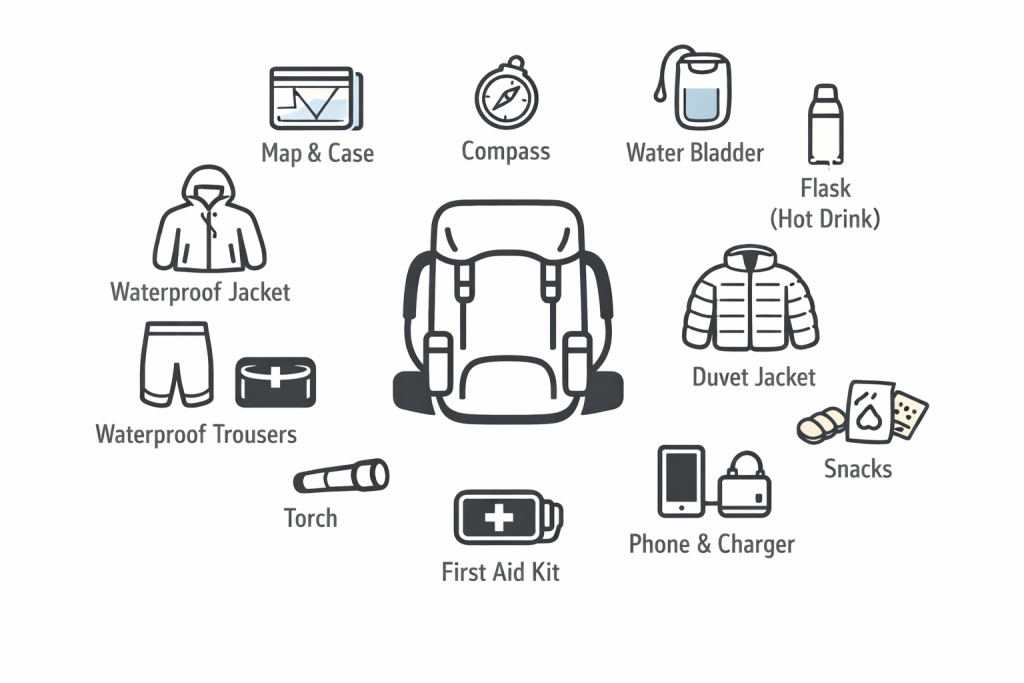
A 25–30 litre day pack is the sweet spot for most hill days. Big enough for layers, food, and essentials; small enough to stay light and balanced. Inside, a thin waterproof liner keeps everything dry even when the weather isn’t playing along.
Waterproofs
A waterproof jacket and waterproof trousers live in the pack unless the day demands that they are on you. They’re not just for rain — they’re for wind, cooling, and those moments when the hill decides to test you. Keeping them accessible is part of staying ahead of the conditions.
Navigation & Safety
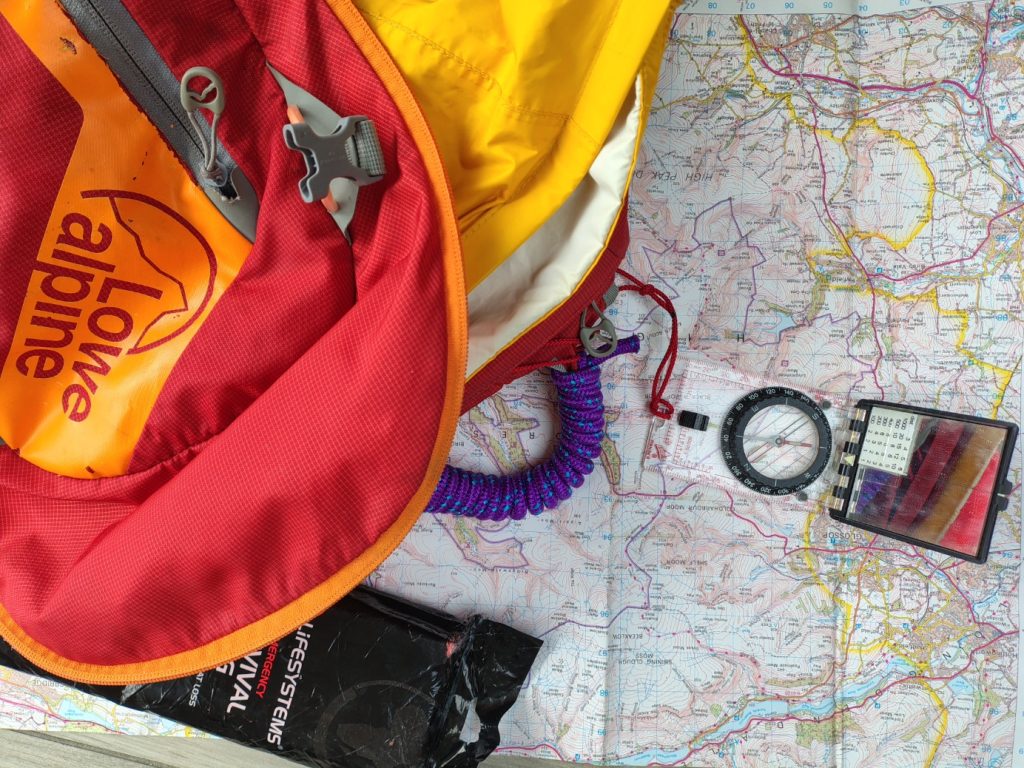
- Map in a dry pouch
- Compass and whistle
- Chinagraph pencil for quick notes or bearings
- Survival bag
- Torch
- First aid kit (inc Foot care)
Some of these are the quiet essentials — the things you hope not to need, but that shape your confidence on the hill. They’re small, light, and part of the rhythm of a safe day out.
Hydration
Most days I carry a water bladder, sometimes paired with a small flask of hot water. The bladder keeps things light and encourages steady drinking; the flask adds warmth without needing a stove. It’s a simple trade‑off: a little extra weight for a lot of comfort. After each walk, the bladder goes in the freezer — a brilliant tip that stops mould and keeps it fresh for the next outing.
Food
A bag of nuts lives permanently in the pack as an “in‑case” food. For the day itself, I take snacks — usually something sugary and homemade, like flapjack. It’s simple fuel that keeps you steady without slowing you down.
Warmth & Comfort
A stuff‑small duvet jacket is one of the most useful pieces of kit on any walk. It weighs very little, packs down tight, and makes a huge difference when you stop moving or the wind picks up. A small beanie hat kept in the pocket helps when it is chucking it down and you need your hood up.
Tech & Tools
- Camera or phone
- Power bank (especially if using digital maps)
These aren’t luxuries — they’re part of the modern hill day. A charged phone is both navigation and safety.
At the Car
When the walk ends, comfort matters. I keep spare socks and a dry thermal top in the car. They turn the drive home from a damp trudge into something warm and civilised.
Why This Matters
A typical kit list isn’t about carrying everything. It’s about carrying the right things — the items that give you options, keep you steady, and let you enjoy the day without thinking about what you’ve forgotten. The hill will always have surprises; your kit shouldn’t be one of them.