
Managing Group Pace (A) — Leadership on the Move
Pace is one of the quiet leadership skills on the hill. It shapes energy, concentration, safety, and the mood of the group. Good pace management isn’t about walking fast or slow — it’s about reading the group and the terrain and keeping everyone steady.
1. The Leadership Principles of Pace
Energy Levels
Groups rarely tire all at once. Watch for early signs: shorter answers, quietness, people drifting behind, or fiddling with kit. A small pace adjustment early prevents bigger problems later.
Concentration
Navigation errors often happen when the group is mentally tired. If conversation drops and people stop noticing the landscape, it’s time to pause, eat, or slow the rhythm.
Terrain
- Climbs: effort spikes quickly; pace should drop before the slope steepens.
- Moors: uneven ground slows everyone; short steps, steady rhythm.
- Descents: concentration increases; tired legs make slips more likely.
- Edges & rocky paths: pace is set by the slowest confident foot.
Weather
Wind, rain, heat, and cold all change how fast a group can move. Wind especially — it drains energy and shortens the length of comfortable pauses.
2. A Practical Planning Rule
Use a simple, reliable rule of thumb:
- 15 minutes per kilometre (≈ 4 km/hr on the flat)
- +1 minute for every 10 metres of ascent
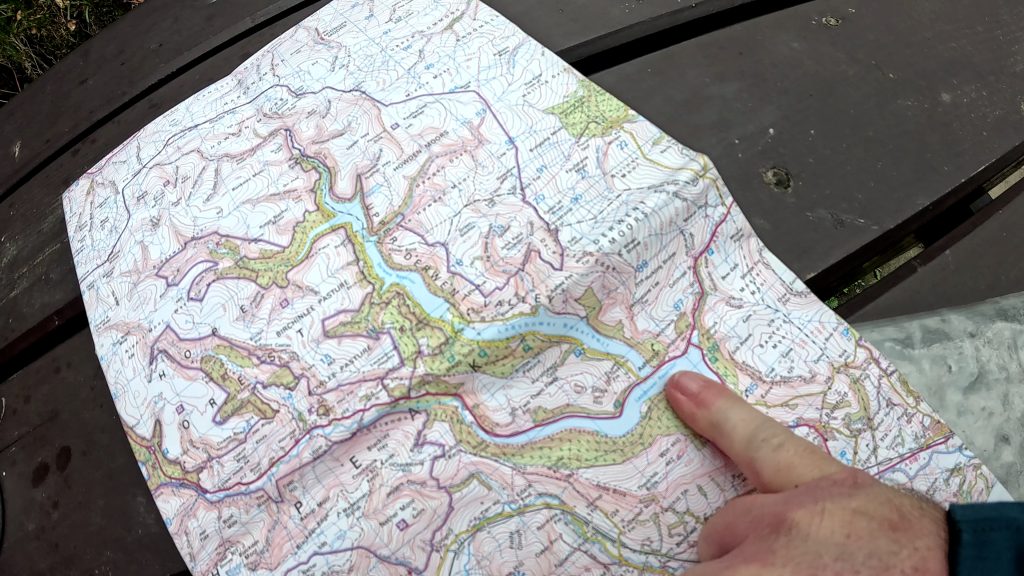
A simple way to judge distance at a glance: on a 1:50k map, one finger is about a kilometre; on a 1:25k map, it takes two. It’s a quick, reliable check when planning pace or confirming timings on the move.
This is a clean, walker‑friendly version of Naismith’s Rule and works perfectly for Peak District terrain.
3. Walker’s Lookup Table — Quick Timing Guide
Flat or Gentle Terrain (≈ 4 km/hr)
Combined Examples (Distance + Ascent)
| Distance | Ascent | Estimated Time |
|---|---|---|
| 1 km | 0 m | 15 mins |
| 1 km | 100 m | 25 mins |
| 2 km | 150 m | 45 mins |
| 3 km | 200 m | 65 mins |
| 4 km | 250 m | 85 mins |
| 5 km | 300 m | 105 mins |
A simple way to estimate timing without needing tricky calculations on the hill.
4. Using Pace as a Leadership Tool
On Climbs
Slow the group before the steep section. A steady climb keeps morale high and prevents early fatigue.
On Descents
Shorten steps, reduce speed, and keep the group close. Tired legs and loose ground are a common combination for slips.
On Long Moors
Set a rhythm, not a speed. Moors drain energy quietly — the aim is consistency, not pace.
When the Group Spreads Out
This is a leadership moment. Bring the group together, reset the pace, and check energy levels.
When Someone Struggles
Adjust early. A small change in pace now avoids a big problem later.
5. A Simple Leadership Phrase
Good pace is quiet leadership — steady, thoughtful, and shaped by the people, not the clock.