
Using a Compass: A Simple Guide
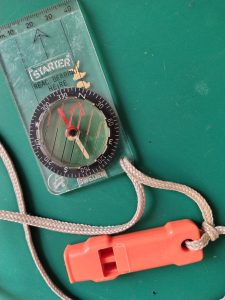
(Lords Seat → Mam Tor example)
A compass is one of the simplest tools you can carry on the hill — and one of the most reassuring. It doesn’t need batteries, it doesn’t lose signal, and it always points to magnetic north. Once you know how to line it up with your map, it becomes a quiet, steady voice that helps you choose the right direction when the landscape feels confusing.
This page walks through the basics using a real example from the Peak District: taking a direction from Lords Seat to Mam Tor.
What a Compass Actually Does
A compass needle always settles pointing north. Everything else — the baseplate, the rotating dial, the lines inside the housing — simply help you compare that north with the map.
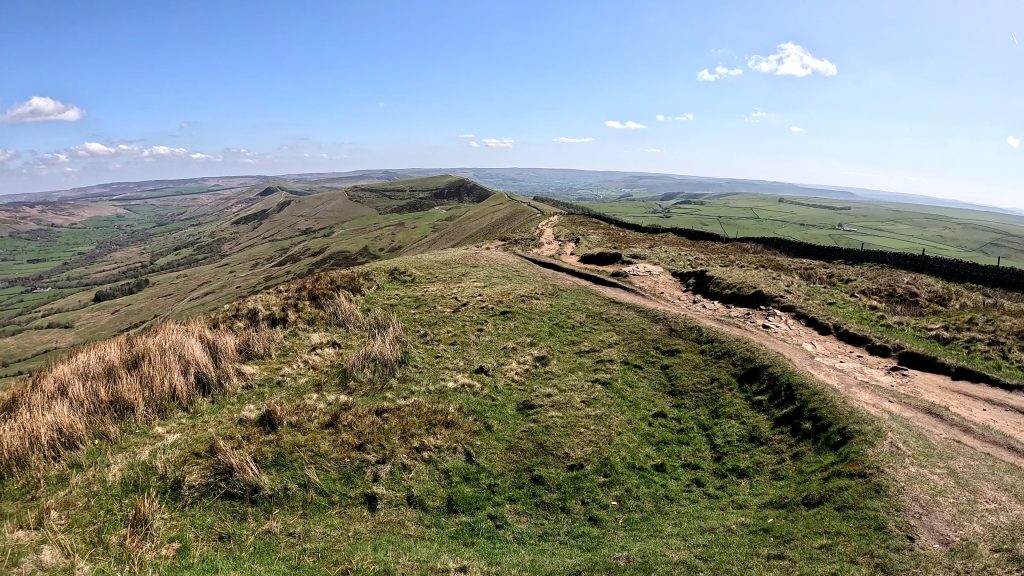
A Simple Example: Lords Seat → Mam Tor
Standing on Lords Seat, Mam Tor is a clear, bold shape to the east. On a good day you can see the whole ridge. But this is a perfect place to practise a bearing because the terrain is open, the direction is obvious, and you can check your accuracy as you go.
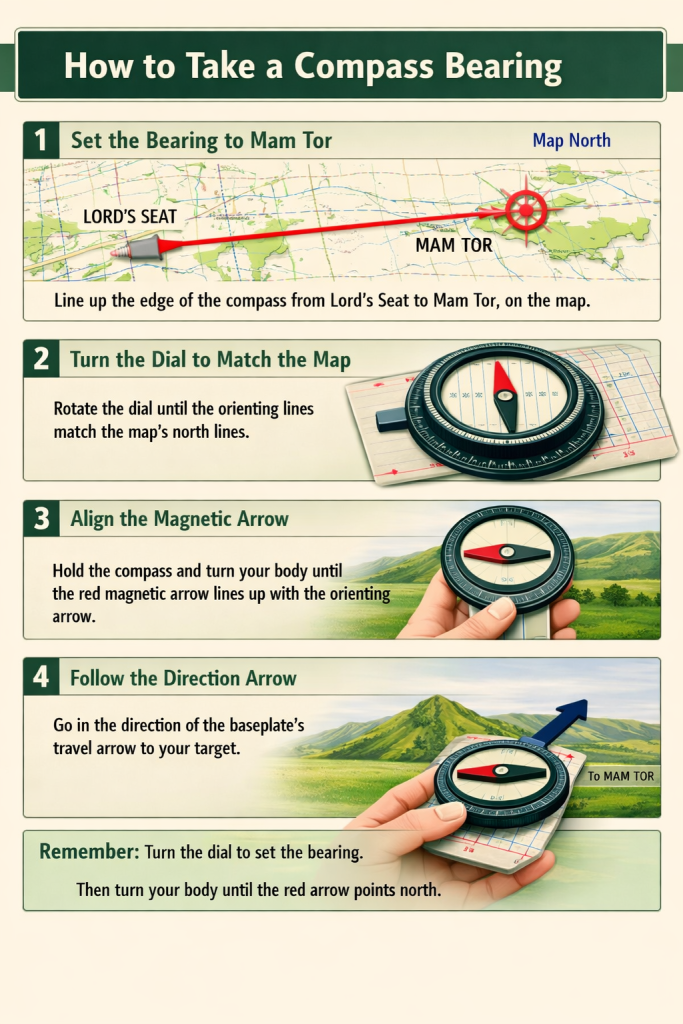
Step 1 — Line up the compass on the map
Place the edge of your compass between Lords Seat and Mam Tor. Make sure the direction‑of‑travel arrow points towards Mam Tor.
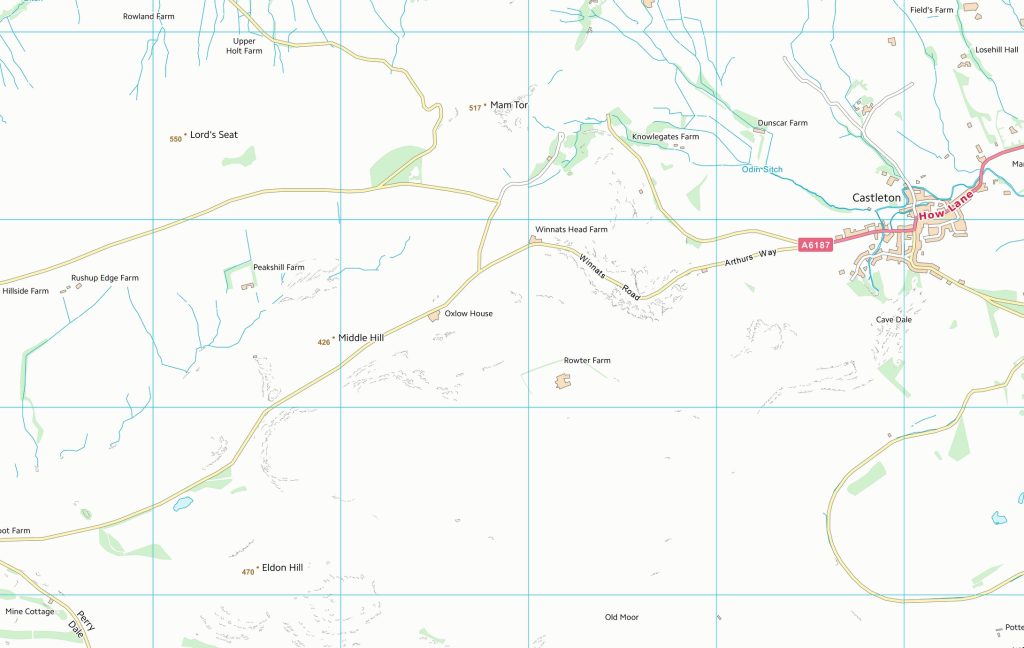
Step 2 — Turn the dial
Rotate the compass dial until the orienting lines inside the dial run parallel with the map’s grid lines. This aligns the compass with the map’s north.
Step 3 — Read the bearing
Look at the number where the direction‑of‑travel arrow meets the dial. That’s your bearing from Lords Seat to Mam Tor.
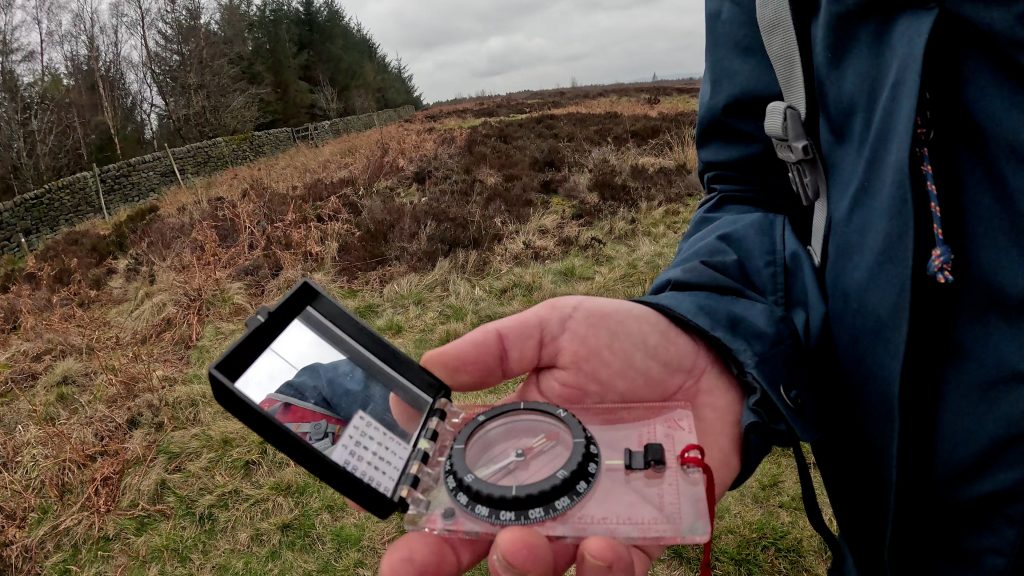
Step 4 — Turn your body to match the needle
Lift the compass up. Turn your whole body until the magnetic needle sits neatly inside the orienting arrow. Now the direction‑of‑travel arrow is pointing the way you need to walk.
Why This Works Well on the Hill
The route from Lords Seat to Mam Tor is ideal for beginners because:
- The ridge is obvious, so you can check your accuracy
- The terrain is open, giving you clear sightlines
- The bearing doesn’t need to be perfect to keep you safe
- It teaches the habit of taking a bearing before visibility drops
- You cannot walk the entire bearing without utilising other skills due to path/hillside drop
It’s a friendly place to build confidence.
Notes for Leaders
These are simple ways to teach the skill without overwhelming people:
1. Start with the landscape, not the compass
Ask: “If you had to point to Mam Tor right now, where would you point?” Let them guess first. Then show how the compass confirms or corrects that instinct.
2. Use the ridge as a safety net
Explain that even if the bearing is slightly off, the ridge naturally funnels you towards the right place. This reduces fear of “getting it wrong”.
3. Teach the habit, not the numbers
The exact degree value matters less than the sequence: map → dial → needle → walk.
4. Let them walk 20–30 metres on the bearing
Then stop and ask: “Does the landscape still match what we expected?” further “Tell me how” This builds the habit of checking, not drifting.
5. Compare the simple compass and the sighting compass
Show how the Silva sighting compass helps hold a precise bearing over longer distances. Let them try both.
Scenario Ideas for Teaching
Scenario 1 — “The Ridge Disappears”
Tell the group: “Imagine the cloud has dropped and you can’t see Mam Tor anymore. How would you keep moving safely?” Let them take a bearing and walk a short section.
Scenario 2 — “Two Paths, One Choice”
On the descent from Lords Seat, point out two diverging paths. Ask which one matches the bearing. This teaches trust in the compass over the path.
Scenario 3 — “Check the Drift”
Have them walk 30 metres on a bearing, then stop. Ask them to point to where they think a given feature is. (You can see some good features of Kinder from here) Then check with the compass. This shows how easy it is to drift without noticing.
Scenario 4 — “Spot a Handrail”
Ask the group to find a feature (wall, ridge line, fence) that roughly matches the bearing. Explain how handrails reduce error and increase confidence. You can remind them of the Stanage episode, where the edge itself acted as a natural handrail. The same idea applies here: when the landscape gives you a long, reliable feature, use it to support your navigation rather than relying on the compass alone.
A Final Thought
A compass isn’t always about precision — it’s about confidence. It gives you a direction you can trust when the landscape becomes uncertain. Practising on clear, friendly ground builds the habits that keep you safe when the weather turns.
And right now, in 2026, it’s an especially good time to learn. Magnetic variation in the UK is effectively nil, which means the map’s north and the compass’s north are almost identical. Beginners can focus on the simple sequence — map → dial → needle → walk — without needing the old rhymes or correction rules unless they want to explore them later.
It’s a rare moment where the basics are as clean and intuitive as they’ll ever be.