
Robin Hood’s Cave (Stanage Edge)
A short, shareable story to bring the landscape to life.
What This Is
A brief, spoken‑friendly history you can share with a group while standing at the cave. Designed to be simple, memorable, and rooted in the landscape around you.
The 2‑Minute Story: Robin Hood’s Cave
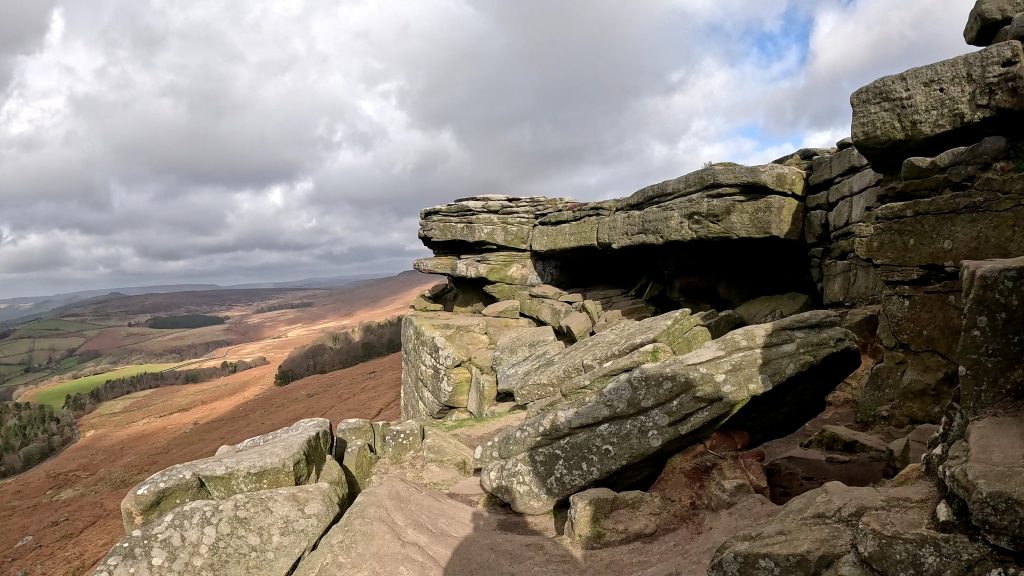
Tucked into the long gritstone line of Stanage Edge is one of the most unusual features on the whole escarpment — Robin Hood’s Cave, a natural chamber carved by thousands of years of weathering. Unlike most “caves” on gritstone edges, this one is big enough to step inside, shelter from the wind (Take care not to get your feet wet as there is usually a small puddle), and imagine who might have used it before you.
The name links it to the folklore of Robin Hood, whose legend spreads across the Midlands and Yorkshire. There’s no evidence he ever hid here, but the story stuck because the cave feels like the sort of place an outlaw would choose — tucked away, defensible, and with a commanding view over the moors.
For centuries, travellers, shepherds, climbers, and walkers have used this little hollow as a refuge. The soot marks and old initials scratched into the rock hint at generations of people pausing here during storms or long crossings of the moor.
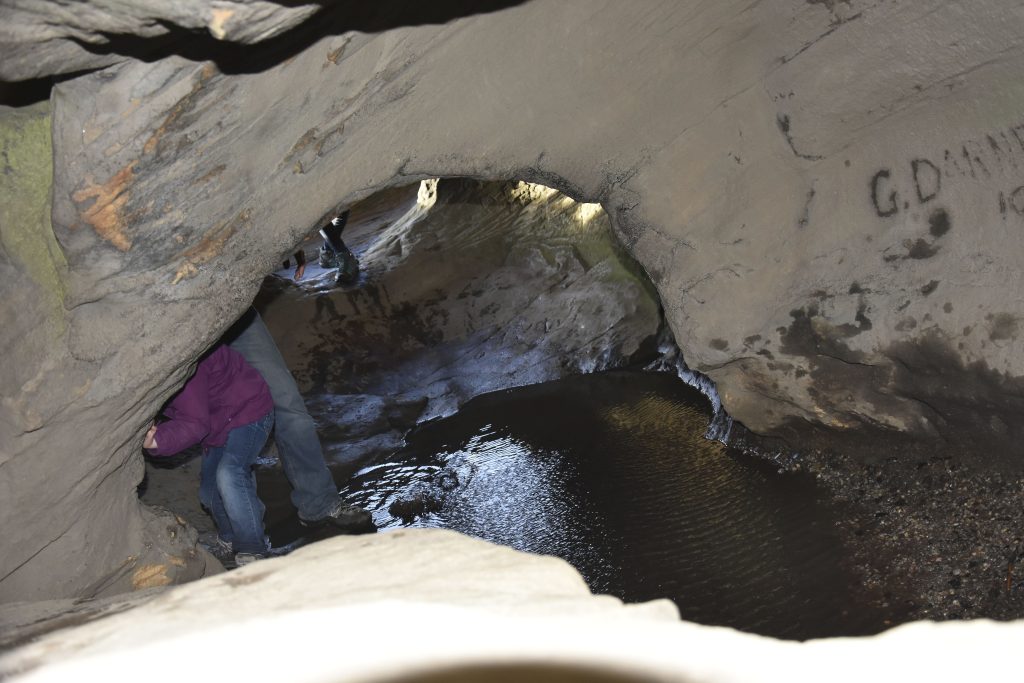
Today it’s a favourite stopping point on the Stanage Edge walk — a tiny, atmospheric space where landscape, legend, and human imagination meet.
Map Fact
Robin Hood’s Cave is labelled on the 1880 and earlier Ordnance Survey 25‑inch map of Stanage Edge, listed as feature “X1, 5.” This confirms that the cave was recognised as a named landmark in the late 19th century — long before modern walking guides made it popular again.
Key Points to Share With a Group
- A rare natural cave formed in gritstone — unusual on edges like Stanage
- Long associated with Robin Hood folklore, though the link is legendary rather than historical
- Used as a shelter by travellers and shepherds for generations
- There is a natural ‘balcony’, through to a nice photographic view
- Soot marks and initials show long-term human use
- A fun, feature to explore with groups, especially in windy weather
How to Deliver It Well (Leadership Skill)
- Let people step inside first — the cave creates its own atmosphere
- Use the view from the entrance to talk about why a hideout here makes sense
- Keep the story light and playful; it’s folklore, not archaeology
- Ask a simple engagement question, such as: “If you were an outlaw, would you choose this spot?”
Why This Matters (Knowledge Pillar)
Short stories tied to a physical feature help people connect with the landscape. They turn a small cave into a moment of shared curiosity, and they build your confidence as a leader who can bring a place to life.
Related Content
- Peaks Compass Episode: Stanage Edge https://youtu.be/HKJ5_-mKWoQ