
The Rowan — often called Mountain Ash — is one of the most distinctive trees in upland Britain. It thrives where other trees hesitate: on steep slopes, rocky edges, and the thin, acidic soils of the Peak District. Its smooth grey bark, feathered leaves, and bright red berries make it easy to recognise at any time of year.
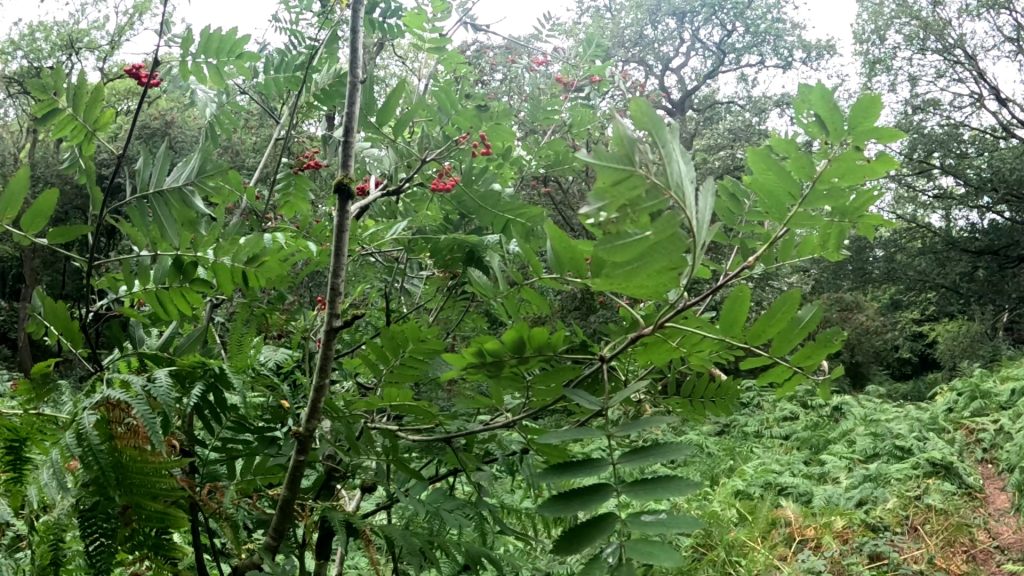
For centuries, the rowan has been seen as a protector tree. Folklore says its red berries ward off misfortune, and its presence near old farmsteads or moorland paths was a sign of safety for travellers. Even today, many walkers treat the rowan as a quiet companion — a tree that marks transitions in the landscape. (In Nordic folklore, rowan grows where worlds meet)
But the rowan is also a practical tree. Its berries feed birds through the lean months, its wood was once used for tool handles, and its habit of growing on boundary lines makes it a natural marker for navigation. A familiar tree with a surprising amount of story. Rowan wood is tough but flexible making it useful for things like pegs, wedges, walking sticks. So if you are in need of that emergency tent peg or pot hanger look out for this tree.
The Tree That Saved Thor
One of the strongest Scandinavian myths comes from Norse tradition:
- Thor, the god of thunder, was once swept away by a river.
- He grabbed a rowan branch to pull himself out.
- Because of this, the rowan became known as “Thor’s salvation” or “the rescue tree.”
Meaning: Rowan was seen as a tree that protects against danger, especially when travelling through wild landscapes. People would even carve rowan crosses and carry them when travelling.
Key Points to Share With a Group
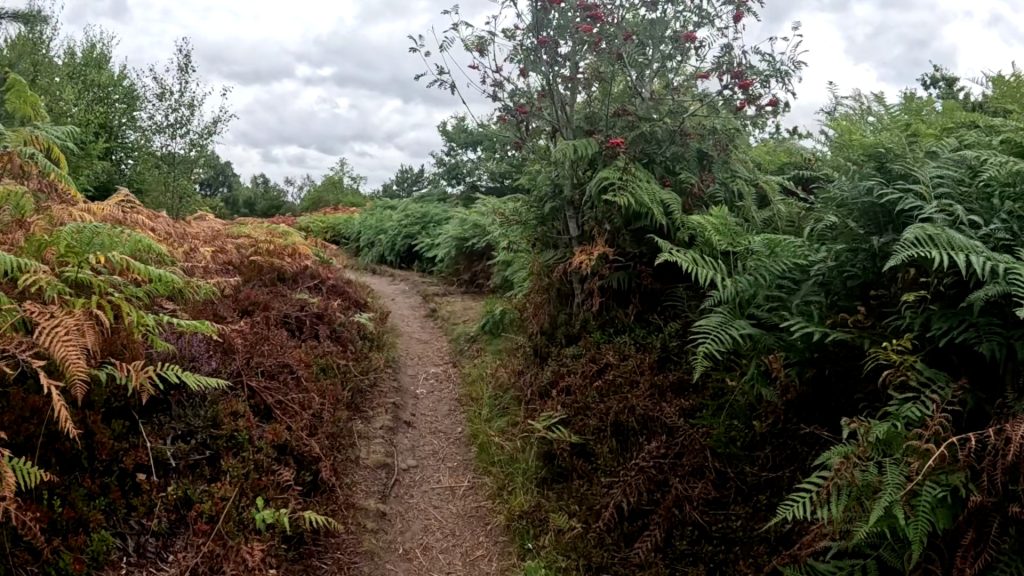
- Grows on thin, acidic soils and rocky slopes — often marking moorland edges
- Recognisable by smooth grey bark, feathered leaves, and bright red berries
- Deep folklore roots: traditionally planted to protect homes and travellers
- Berries feed wildlife through autumn and winter. Bitter and mildly toxic if raw, but safe when cooked. (E.g. Rowan Jam)
- A natural navigation clue: often found where woodland meets open ground
How to Deliver It Well (Leadership Skill)
- Invite people to notice where rowan grows — often at thresholds in the landscape
- Use the folklore lightly: it’s a “guardian tree” story, not a heavy myth
- Add a simple question: “If you had to choose a tree to guide you across the moor, what would it be?”
Why This Matters (Environment Pillar)
Knowing the stories and habits of common trees helps people read the landscape with more confidence. It turns a familiar rowan into a moment of discovery — a tree that guides, protects, and marks the edges of the wild.