
Peaks Compass | 2‑Minute Read
Moorland Peat: The Ground Beneath the Story
Moorland peat is one of the quiet powerhouses of the uplands. It looks simple at first glance – a dark, springy surface under heather and cotton grass – but it’s actually a living archive of thousands of years. Layer by layer, it stores carbon, filters water, and shapes the character of every step we take across the high moors.
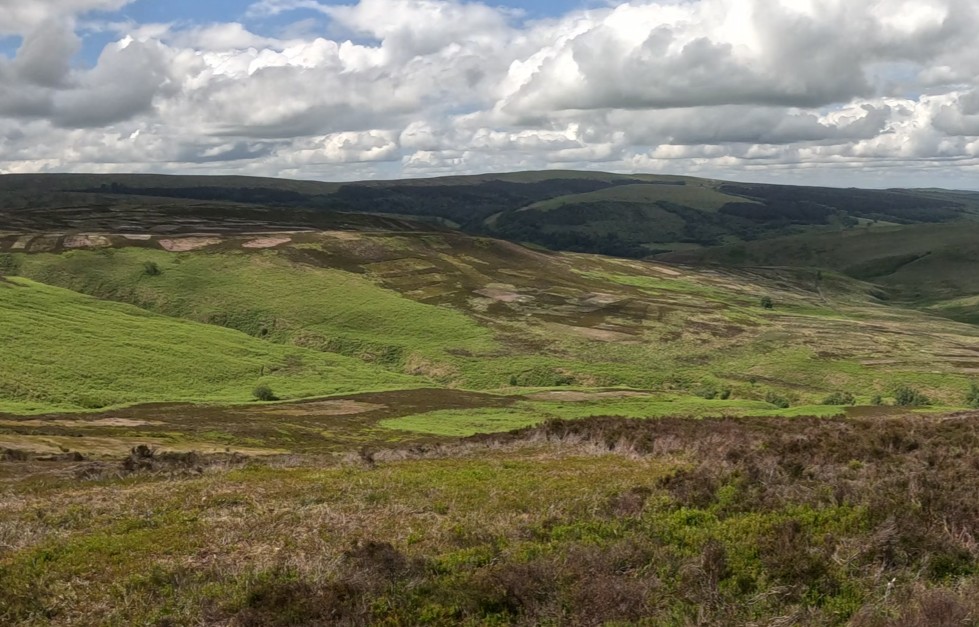
On recent Peaks Compass episodes, we’ve seen how fragile that surface can be. Those rectangular patches of heather regrowth on the moor tops aren’t random; they’re part of a long‑term restoration effort. Controlled cutting and replanting help stabilise the peat, slow erosion, and encourage healthier root systems. It’s a reminder that moorland isn’t a wilderness untouched by people – it’s a landscape constantly being repaired, protected, and re‑imagined.
But peat has a personality of its own. On Kinder, in freezing rain, the path dissolved into a series of left‑right decisions, each one a gamble between staying on the line or sinking into the soft ground. Micro‑navigation with your head down becomes a trap: you follow the next firm-looking patch, then the next, and before long you’ve drifted metres off course. It’s subtle, and it happens fast.
Elsewhere, man‑made drainage channels cut across the moor like scars. They were originally dug to dry the land for grazing and shooting, but today they can turn a simple crossing into a frustrating zig‑zag of ravines and banks. Restoration teams now block many of these channels to re-wet the peat, but the legacy of those cuts still shapes the way we move across the hills.
Peat is both the challenge and the charm of the uplands. It slows you down, forces you to think, and demands that you read the ground as much as the map. And in return, it gives you a landscape that feels ancient, raw, and deeply alive.
What Peat Actually Is
Peat is a deep, dark soil made from thousands of years of slowly decaying plants, mostly heather, mosses and cotton grass. Because the ground is so wet and starved of oxygen, those plants never fully break down — they compress instead, forming a dense, sponge‑like layer that can be metres thick. It holds huge amounts of water, locks away ancient carbon, and creates the soft, shifting surface you feel underfoot on the high moors. When you walk across it, you’re literally stepping on a landscape that has been building itself grain by grain since long before any footpath existed.
Learn more about the work going on to develop this fantastic habitat at the Peak District Foundation :Moorland Restoration – Peak District National Park Foundation
Leadership Scenario Moment
You’re leading a small group across a stretch of open moor in poor visibility. The ground ahead is a maze of soft peat, old drainage ditches, and faint paths that weave unpredictably. The group begins to spread out as each person instinctively chooses their own “best” line. What’s your next leadership move to keep the team safe, together, and on a navigable route without rushing or losing confidence?